
Travels in Genre and Medievalism
Monday, April 15, 2019
A Comment on Notre Dame
𝔅y now,word will have reached all corners of the fire that has erupted at Notre Dame Cathedral in Paris, France. As an emblem of the medieval and as an instantiation of medievalism, of how the medieval is used and misused by later times, as a work of human achievement, among many others, the edifice has been of singular importance. The loss of so much in flame is a thing the sadness of which passes the ability to tell truly; the Society joins in mourning for the loss.

Thursday, April 11, 2019
Galavant Rewatch 1.2, "Joust Friends"
Read the previous entry in the series here.
Read the next entry in the series here.
Galavant begins to return to himself, and others' plans proceed, as the series moves into its main stream of action.
Directed by Chris Koch
Galavant, Isabella, and Sid proceed through the forest until ambushed by bandits. Galavant fights them off with relative ease, to Madalena's acclaim. Richard soon appears to mock him for his pantlessness--and Galavant wakes from a dream to Isabella's rebuke. Galvant determines to proceed on a heroic journey--in song, while Sid and Isabella comment wryly about the affair.
It becomes clear that Galavant has work to do to return to fighting trim, and entry in an advertised joust is offers him an opportunity to carry out that work, as well as to fund their progress towards Valencia.
Meanwhile, in Valencia, Richard's gustatory habits disgust Madalena and Gareth. Richard is confused by her reaction and consults with Gareth, who purposes to teach him greater "manliness" to earn Madalena's respect.
At the joust, Galavant is recognized by staff and by another knight who taunts him; Sid wagers Isabella's jewel as Galavant's entry fee. The two knights exchange juvenile barbs, and Isabella makes sure that he has time to prepare, arguing that he need not fight through preliminaries based upon his reputation. The staff at the event agree and give him a bye.
A training montage follows, in which Isabella roundly schools Galavant before he regains his confidence. As is customary, the training seems not to take terribly long. And, as is customary, the character undertaking the training improves substantially. Meanwhile, the knight who had taunted Galavant, Jean Hamm, proceeds through his series of tilts, doing so with relative ease until his match against Galavant is assured. To ensure Galavant's success, however, Isabella drugs Jean Hamm.
At length, the match between Galavant and Hamm proceeds. The effects of Isabella's efforts on Hamm are shown as he staggers, vomiting, to the lists. Galavant rides into the lists, but he suffers the muscular effects of overtraining. Their clash is underwhelming; neither can ride with much speed or skill, and both fall supine from their horses--somehow ending up on the same side of the lists. Galavant rises first, winning the match.*
All the while, in Valencia, following Gareth's tutelage, Richard presents himself to Madalena in a "manlier" aspect. It seems initially to have the desired effect. It does not last, however, and Madalena returns to her scorn for Richard in short order--after solid four-part harmony with Galavant and Isabella.
The present episode also makes both overt and subtle references to medieval literature and record. Aside from the (too-clean, too highly-produced) surface trappings of clothing, armor, and castles, early in the episode, Galavant makes to inspect bent and broken foliage. He displays a hunter's skills, which are commonly associated with chivalric and noble characters. The Malorian Sir Tristram, in particular, is noted for his outdoorsman's skills, being ascribed the author of a seminal text on the topic.
Too, and in something that medieval literature admits of far more than medievalist work tends to, the series shows Richard--shows several characters, in fact, but Richard most of all--as openly emoting. Medieval literature abounds with dramatic declarations and the overt signs of feeling, in contrast to the staid and stoic masculinity that Gareth, in the first episodes of the series, appears to emblematize and that much prevailing culture valorizes. And it is clear that the characters are not rebuked for being emotional in itself, which is a welcome thing to see--and one solidly in line with chivalric source materials.
How such things progress will be interesting to see...
*Among the spoils of victory is a chicken. There is an unfortunate short scene focusing on Sid's delight at getting to eat said chicken--which brings to mind particular racist tropes that the producers did not need to invoke and would have done well to avoid. Again, then, while the series does well to feature persons of color and to make them more than caricature--indeed, many of the attendees at the jousting event are persons of color, and they are no more or less present than any other audience member; they are normalized through unheralded inclusion--it seemingly cannot help but play into old discourse that, on review, sours enjoyment of what might otherwise be a simple good time.
Read the next entry in the series here.
Galavant begins to return to himself, and others' plans proceed, as the series moves into its main stream of action.
1.2, "Joust Friends"
Written by Dan FogelanDirected by Chris Koch
Synopsis
 |
| Snarky singing in process. Image taken from the episode, used for commentary. |
It becomes clear that Galavant has work to do to return to fighting trim, and entry in an advertised joust is offers him an opportunity to carry out that work, as well as to fund their progress towards Valencia.
 |
| The professor is in... Image taken from the episode, used for commentary. |
At the joust, Galavant is recognized by staff and by another knight who taunts him; Sid wagers Isabella's jewel as Galavant's entry fee. The two knights exchange juvenile barbs, and Isabella makes sure that he has time to prepare, arguing that he need not fight through preliminaries based upon his reputation. The staff at the event agree and give him a bye.
 |
| The Flynning's beginning. Image taken from the episode, used for commentary. |
At length, the match between Galavant and Hamm proceeds. The effects of Isabella's efforts on Hamm are shown as he staggers, vomiting, to the lists. Galavant rides into the lists, but he suffers the muscular effects of overtraining. Their clash is underwhelming; neither can ride with much speed or skill, and both fall supine from their horses--somehow ending up on the same side of the lists. Galavant rises first, winning the match.*
All the while, in Valencia, following Gareth's tutelage, Richard presents himself to Madalena in a "manlier" aspect. It seems initially to have the desired effect. It does not last, however, and Madalena returns to her scorn for Richard in short order--after solid four-part harmony with Galavant and Isabella.
Discussion
The series continues to revel in its medievalism in the present episode, not least through invoking other dominant perceptions of the medieval. For example, one of the signs Galavant and company pass shows the direction to Game of Thrones's Winterfell. (Again, Shiloh's commentaries on Game of Thrones are well worth your time to read them.) And the historically inaccurate, small-scale jousting tournament is itself a common feature of medievalist works, compressing the Middle Ages temporally and sanitizing it substantially.The present episode also makes both overt and subtle references to medieval literature and record. Aside from the (too-clean, too highly-produced) surface trappings of clothing, armor, and castles, early in the episode, Galavant makes to inspect bent and broken foliage. He displays a hunter's skills, which are commonly associated with chivalric and noble characters. The Malorian Sir Tristram, in particular, is noted for his outdoorsman's skills, being ascribed the author of a seminal text on the topic.
Too, and in something that medieval literature admits of far more than medievalist work tends to, the series shows Richard--shows several characters, in fact, but Richard most of all--as openly emoting. Medieval literature abounds with dramatic declarations and the overt signs of feeling, in contrast to the staid and stoic masculinity that Gareth, in the first episodes of the series, appears to emblematize and that much prevailing culture valorizes. And it is clear that the characters are not rebuked for being emotional in itself, which is a welcome thing to see--and one solidly in line with chivalric source materials.
How such things progress will be interesting to see...
*Among the spoils of victory is a chicken. There is an unfortunate short scene focusing on Sid's delight at getting to eat said chicken--which brings to mind particular racist tropes that the producers did not need to invoke and would have done well to avoid. Again, then, while the series does well to feature persons of color and to make them more than caricature--indeed, many of the attendees at the jousting event are persons of color, and they are no more or less present than any other audience member; they are normalized through unheralded inclusion--it seemingly cannot help but play into old discourse that, on review, sours enjoyment of what might otherwise be a simple good time.
Thursday, April 4, 2019
Galavant Rewatch 1.1, "Pilot"
Read the previous entry here!
Read the next entry here!
The musical series begins with an appropriately titled episode that sets the winkingly satirical tone of the rest of the show.
Directed by Chris Koch
An expository song lays out the basic premise of the series, that "a hero known as Galavant" rides around righting wrongs and loving a woman, Madalena. That he is highly regarded in-milieu is made clear.
King Richard soon enters the narrative and abducts Madalena. Galavant rushes off to save her, purporting to interrupt the intended wedding; Madalena calls out to him as Richard interrupts her with lewd suggestions that clearly disturb her.
Galavant fights his way into Richard's castle, notably not killing the guards aligning against him, as the expository song resumes. He does interrupt the wedding and, after an impassioned speech, calls on Madalena to return to him; she decides instead to remain with Richard, choosing the noted fame and fortune over love. Galavant is removed from the scene by Richard's supporter, Gareth.
A year later--with a title card proclaiming such--Galavant's squire, Sid, makes to rouse him from his drunken stupor to accept a charge from a Valencian princess whose long name--Isabella Lucia Maria Elizabetta--is frequently truncated to Isabella. She tries to importune him to aid her, citing her family's straitened circumstances; he initially refuses, even when offered a substantial payment. She reprises the theme of the the initial expository song, which he joins in a reiterated rebuttal before shutting his door in her face.
Isabella reflects on her situation, which is somewhat ludicrous, given that Richard and Madalena have invaded Valencia (and Madalena is cuckolding Richard). A scene in Valencia explicates Richard's incapacity and his vexation with the memory of Galavant (as well as his dependency on Gareth).
In a pub, Galavant begins to reconsider taking up Isabella's charge as she continues to recount events leading up to her arrival with him. He also explicates his own backstory--leading up to his betrayal by Madalena. That Richard is the source of her trouble is what convinces him to go along with her.
As it happens, though, Isabella is acting in Richard's interest; she is bait to bring Galavant where Richard can kill him...
Far more overt is the overall premise of the show. It is clearly meant to be medievalist, focusing on small kingdoms, castle-dwelling armored sword-fighters, a questing knight, accompanied by a squire and a princess, seeking to redeem a kingdom and reclaim a lost love; it is an almost prototypical chivalric romance. Almost. It becomes clear quickly that the series is going to make much of snarky humor and ribald jokes that make it more a fabliau than the straight-ahead romance. It is an interesting subversion of expectation, one that moves away from the usual subversions of medieval romance--Martin's works come to mind as prominent examples (and read Shiloh's excellent commentaries on them!)--which work for grittier "realism" than is usually admitted of in the chivalric romance. Yet the fabliau was a popular genre in high medieval Europe, even if it is not often invoked; the series premise marks it as not only medievalist, but medievalist in a way that suggests the producers are actually trying to work from what is known about the medieval.
To some extent, at least. There are things that are inaccurate, of course. Anachronism abounds, for one. The armor worn by Galavant and Gareth, for another example, is more a suggestion of armament than actually effective protection. The people are remarkably clean throughout, even those who have been imprisoned for long periods or who are clearly working with livestock and fresh produce--neither generally admits of soil-free attire. And the numbers of people present in the castles and in the depicted countryside seem low--which is a frequent trope in medievalist works, to be sure.
That a series would get things wrong is to be expected; what is surprising is what Galavant gets right even in its first episode. In addition to working towards the fabliau, the inclusion of people of color in a pseudo-medieval-European setting is an often-underrecognized accuracy; people of color were present and active there and then, despite what some ill-workers might suggest. That people at varying socioeconomic levels are present and presented is, as well. There is a tendency to focus only on the titular nobility and royalty, which reifies a "great persons"--and, too often, "great men"--understanding of culture and history that is not accurate; the series avoids it. Additionally, the situation of the in-milieu jester has a delightfully Chaucerian resonance.
I was left on the initial watching and on the rewatch wanting to see what would come next. Pursuing it seems like it will be rewarding.
*As a side-note, this picture--a still taken from the episode--is useful in that it shows both characters. It is problematic as all get out with Sid, though; the character is not making an ironic or sarcastic expression in the moment, though he does at other points in the episode and throughout the series. As such, while the series does well to involve persons of color in a medievalist setting, and to do so as major characters, it is not free of prevailing anachronistic stereotypes that are decidedly not to its credit or its producers'.
Read the next entry here!
The musical series begins with an appropriately titled episode that sets the winkingly satirical tone of the rest of the show.
1.1, "Pilot"
Written by Dan FoglemanDirected by Chris Koch
Synopsis
 |
| "...a fairy-tale cliché" Image taken from the episode, used for commentary |
King Richard soon enters the narrative and abducts Madalena. Galavant rushes off to save her, purporting to interrupt the intended wedding; Madalena calls out to him as Richard interrupts her with lewd suggestions that clearly disturb her.
 |
| Our eponymous hero Image taken from the episode, used for commentary |
A year later--with a title card proclaiming such--Galavant's squire, Sid, makes to rouse him from his drunken stupor to accept a charge from a Valencian princess whose long name--Isabella Lucia Maria Elizabetta--is frequently truncated to Isabella. She tries to importune him to aid her, citing her family's straitened circumstances; he initially refuses, even when offered a substantial payment. She reprises the theme of the the initial expository song, which he joins in a reiterated rebuttal before shutting his door in her face.
 |
| The Princess and the Squire* Image taken from the episode, used for commentary |
In a pub, Galavant begins to reconsider taking up Isabella's charge as she continues to recount events leading up to her arrival with him. He also explicates his own backstory--leading up to his betrayal by Madalena. That Richard is the source of her trouble is what convinces him to go along with her.
As it happens, though, Isabella is acting in Richard's interest; she is bait to bring Galavant where Richard can kill him...
Discussion
I will admit that, when I added the series to my family's Netflix queue, I did not expect it to be a musical. I am not entirely fond of the genre--rather the opposite is true--but the generic conventions do work reasonably well with prevailing medievalist tropes in the United States. The network that hosts Galavant, ABC, is a subsidiary of Disney, which is itself a major source of ideas about the medieval through its long series of animated children's movies. Many of them feature fairy-tale renderings of the medieval and medievalist, and most of them are musicals. Consequently, Galavant being a musical series serves as a quiet reference back to Disney's other properties and so a connection to a common, if ultimately inaccurate, form of the medieval.Far more overt is the overall premise of the show. It is clearly meant to be medievalist, focusing on small kingdoms, castle-dwelling armored sword-fighters, a questing knight, accompanied by a squire and a princess, seeking to redeem a kingdom and reclaim a lost love; it is an almost prototypical chivalric romance. Almost. It becomes clear quickly that the series is going to make much of snarky humor and ribald jokes that make it more a fabliau than the straight-ahead romance. It is an interesting subversion of expectation, one that moves away from the usual subversions of medieval romance--Martin's works come to mind as prominent examples (and read Shiloh's excellent commentaries on them!)--which work for grittier "realism" than is usually admitted of in the chivalric romance. Yet the fabliau was a popular genre in high medieval Europe, even if it is not often invoked; the series premise marks it as not only medievalist, but medievalist in a way that suggests the producers are actually trying to work from what is known about the medieval.
To some extent, at least. There are things that are inaccurate, of course. Anachronism abounds, for one. The armor worn by Galavant and Gareth, for another example, is more a suggestion of armament than actually effective protection. The people are remarkably clean throughout, even those who have been imprisoned for long periods or who are clearly working with livestock and fresh produce--neither generally admits of soil-free attire. And the numbers of people present in the castles and in the depicted countryside seem low--which is a frequent trope in medievalist works, to be sure.
That a series would get things wrong is to be expected; what is surprising is what Galavant gets right even in its first episode. In addition to working towards the fabliau, the inclusion of people of color in a pseudo-medieval-European setting is an often-underrecognized accuracy; people of color were present and active there and then, despite what some ill-workers might suggest. That people at varying socioeconomic levels are present and presented is, as well. There is a tendency to focus only on the titular nobility and royalty, which reifies a "great persons"--and, too often, "great men"--understanding of culture and history that is not accurate; the series avoids it. Additionally, the situation of the in-milieu jester has a delightfully Chaucerian resonance.
I was left on the initial watching and on the rewatch wanting to see what would come next. Pursuing it seems like it will be rewarding.
*As a side-note, this picture--a still taken from the episode--is useful in that it shows both characters. It is problematic as all get out with Sid, though; the character is not making an ironic or sarcastic expression in the moment, though he does at other points in the episode and throughout the series. As such, while the series does well to involve persons of color in a medievalist setting, and to do so as major characters, it is not free of prevailing anachronistic stereotypes that are decidedly not to its credit or its producers'.
Thursday, March 28, 2019
A New Rewatch Series: Galavant
ℑ first became aware of the ABC series Galavant while I lived in Oklahoma and was visiting family in Texas. We did not have television service, but they did and the series was being advertised as an upcoming attraction. The medievalist trappings evident in the advertisement attracted my attention--because I was working on this webspace then, and its related projects--but I thought little else of it until I saw it appear on Netflix. Remembering having thought of it, I added it to my family's queue and promptly forgot about it again, being occupied with much else.
Recently, though, it came to mind again. My wife and I were looking for something to watch with our daughter, something with which we could fill some idle time together and which would not necessarily provoke the kinds of questions we know are coming but do not look forward to being asked yet. And we stumbled upon Galavant again, settled in to watch, and, well...there's a reason I'm moving ahead on a rewatch series now.
Brief as the series is--lasting only two seasons on ABC, though there are some rumors that Netflix will take it up for another--the series will not be the sprawling thing that the Voltron: Legendary Defender rewatch was, nor yet the more focused flagship that the Game of Thrones rewatch has been. But, as a program featuring on prime time broadcast television, Galavant is one that attracted a fair bit of attention, and how it instantiates medievalism needs some attention therefore. I hope to make a fair go of it.
I hope you will begin reading the series here soon.
Recently, though, it came to mind again. My wife and I were looking for something to watch with our daughter, something with which we could fill some idle time together and which would not necessarily provoke the kinds of questions we know are coming but do not look forward to being asked yet. And we stumbled upon Galavant again, settled in to watch, and, well...there's a reason I'm moving ahead on a rewatch series now.
Brief as the series is--lasting only two seasons on ABC, though there are some rumors that Netflix will take it up for another--the series will not be the sprawling thing that the Voltron: Legendary Defender rewatch was, nor yet the more focused flagship that the Game of Thrones rewatch has been. But, as a program featuring on prime time broadcast television, Galavant is one that attracted a fair bit of attention, and how it instantiates medievalism needs some attention therefore. I hope to make a fair go of it.
I hope you will begin reading the series here soon.
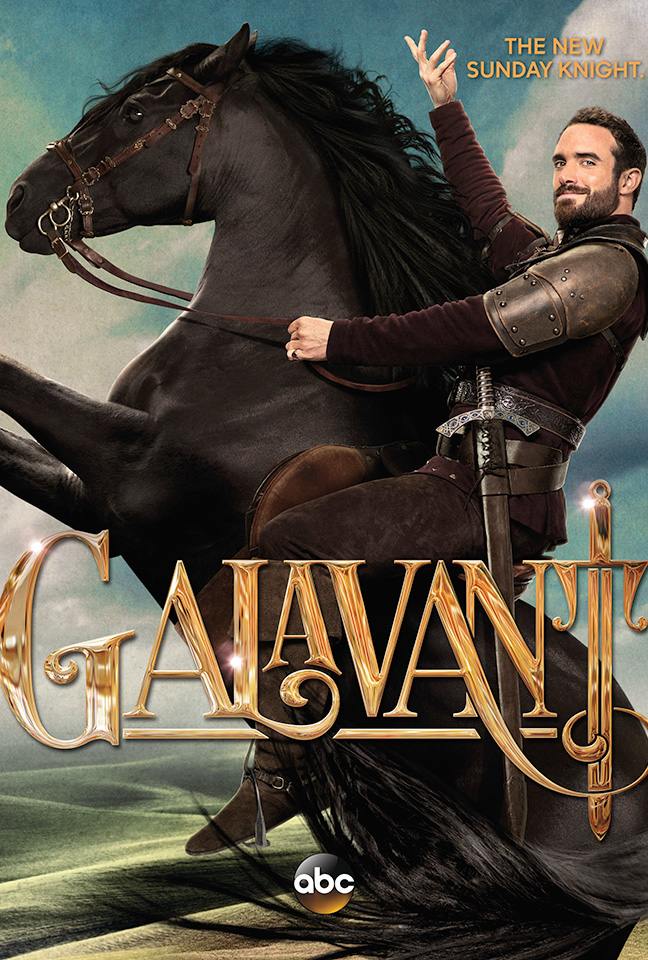 |
| The promo poster seems fitting. I'm borrowing it from IMDB for purposes of reporting and commentary. |
Thursday, March 21, 2019
We'll Return You to Our Regularly Scheduled Programming after This Message
𝔉or a while, now, there's been a weekly Thursday post noting progress through a cartoon series. In recent months, it's even been a regular thing. But that series is done, and a bit of a break is in order. If nothing else, I need to do a bit of cleanup on this blog and look into a few other things. So it may be a bit before there's another regular series popping up here.
Worry not, however; there are other series intended, as well as the occasional stand-alone piece. And we are always happy to have more contributors; if you've got an idea, please send it our way. We'd love to hear from you.
As always, thank you for reading!
Worry not, however; there are other series intended, as well as the occasional stand-alone piece. And we are always happy to have more contributors; if you've got an idea, please send it our way. We'd love to hear from you.
As always, thank you for reading!
Thursday, March 14, 2019
Voltron: Legendary Defender (Re)Watch 8.13, "The End Is the Beginning"
Read the previous entry here!
Voltron: Legendary Defender finds an end--and a promise of a new beginning.
Directed by Michael Chang
Honerva renews the ritual to pierce the bounds of reality, draining Voltron's energy to do so. Pursuit continues, though the reality left behind crumbles behind them, and Voltron emerges into a strangely liminal space between realities.
Honerva presses her attack upon Voltron--and upon entire realities. In her rage, Honerva purposes to unmake all, and Voltron is rebuffed by the effects of her attacks on the other existences, glimpsed in fleeting images as they are undone. At length, only one remains, a solitary chain of causality ripe for uncreation. It, Voltron is able to defend, rejoining melee with a renewed purpose.
Honerva is driven back, along with the Paladins. The latter are able to convince Honerva to repent and work to restore the realities that were undone. Allura remains behind, as well, to the sadness of the other Paladins, and the universes are restored.
In the denouement, the Paladins and their allies take stock of what has happened. Altea is restored. The Galra Empire is pacified and incorporated into a federated government. Peace talks in Allura's name work to ease tensions. The Paladins go about their lives, and matters give every appearance of being well. The Lions depart of themselves, vanishing into the cosmos, Voltron's time having ended at last.

On an entirely personal note, there is a strange combination of relief and sadness in writing up the final episode. This project has, admittedly, taken longer to complete than ought to have been the case, and the way it was handled early on leaves a fair bit to be desired. (I'm sure some will say that the way it has continued to be handled does, too.) But it is done, now, and while there is pride in getting it done and relief that no more needs doing on it, there is some sadness that there is not more to do with it--at least not here. My words will not be the last written on the topic, though, or I hope they will not, and I look forward to reading what others will have to say. I can hope that what I have said will prove useful to them as they take up their own parts of the work.
Voltron: Legendary Defender finds an end--and a promise of a new beginning.
8.13, "The End Is the Beginning"
Written by Joaquim Dos Santos and Lauren MontgomeryDirected by Michael Chang
Synopsis
The towering titans that are Voltron and Honerva's Robeast face off, resuming their melee from previous episodes. Recognizing the threat to the local population, the former tries to move the battle into the hinterlands. The effort is minimally successful. |
| Clearly. Image taken from the episode, used for commentary. |
Honerva renews the ritual to pierce the bounds of reality, draining Voltron's energy to do so. Pursuit continues, though the reality left behind crumbles behind them, and Voltron emerges into a strangely liminal space between realities.
 |
| It is an odd place, if it is a place. Image taken from the episode, used for commentary. |
Honerva presses her attack upon Voltron--and upon entire realities. In her rage, Honerva purposes to unmake all, and Voltron is rebuffed by the effects of her attacks on the other existences, glimpsed in fleeting images as they are undone. At length, only one remains, a solitary chain of causality ripe for uncreation. It, Voltron is able to defend, rejoining melee with a renewed purpose.
 |
| It does seem to be going badly. Image taken from the episode, used for commentary. |
Honerva is driven back, along with the Paladins. The latter are able to convince Honerva to repent and work to restore the realities that were undone. Allura remains behind, as well, to the sadness of the other Paladins, and the universes are restored.
 |
| As expected, really. Image taken from the episode, used for commentary, as is the next one. |
In the denouement, the Paladins and their allies take stock of what has happened. Altea is restored. The Galra Empire is pacified and incorporated into a federated government. Peace talks in Allura's name work to ease tensions. The Paladins go about their lives, and matters give every appearance of being well. The Lions depart of themselves, vanishing into the cosmos, Voltron's time having ended at last.

Discussion
The series finale, in addition to making several covert comments about social matters, returns to the Marian associations of Allura. As is noted elsewhere in the comments about the series, Allura is something of a stand-in for the Virgin Mary, whose efforts and experience lead to salvation in the Christian ideology of medieval Europe. As is typically conceived, Mary is a preferred if not necessary intercessor for Christian prayer and forgiveness, the agent through which mercy is achieved--and the episode puts Allura in the position of offering mercy to Honerva and acting to provide salvation to all. While the framing is not restricted to the medieval in its overtones and evocations, it makes its case at the end of a series long established as decidedly connected to the medieval, so the resonance with medieval notions sings out strongly.On an entirely personal note, there is a strange combination of relief and sadness in writing up the final episode. This project has, admittedly, taken longer to complete than ought to have been the case, and the way it was handled early on leaves a fair bit to be desired. (I'm sure some will say that the way it has continued to be handled does, too.) But it is done, now, and while there is pride in getting it done and relief that no more needs doing on it, there is some sadness that there is not more to do with it--at least not here. My words will not be the last written on the topic, though, or I hope they will not, and I look forward to reading what others will have to say. I can hope that what I have said will prove useful to them as they take up their own parts of the work.
Friday, March 8, 2019
More about #Kzoo2019
ℑt was noted in an earlier post that there would be a bit of a survey of members' planned attendance at the 2019 International Congress on Medieval Studies at Western Michigan University in Kalamazoo. The promised survey is at the URL below:
The form asks after membership, planned attendance, plans to stay past the Congress's closure on Sunday, and thoughts about the time after that closure. Responses will determine whether the Society tries to reserve rooms at various places, so your reply is greatly appreciated.
We hope to see you at the 'zoo!
The form asks after membership, planned attendance, plans to stay past the Congress's closure on Sunday, and thoughts about the time after that closure. Responses will determine whether the Society tries to reserve rooms at various places, so your reply is greatly appreciated.
We hope to see you at the 'zoo!
Thursday, March 7, 2019
Voltron: Legendary Defender (Re)Watch 8.12, "The Zenith"
Read the previous entry here!
Read the next entry here!
The final confrontation of the series continues in the penultimate episode of Legendary Defender.
Directed by Eugene Lee
It also resumes on the part of Honerva and her supporters. Honerva rallies her pilots against the Paladins, and battle is joined. Honerva's powers prove formidable amid the melee, which draws on with the help of one of the Altean Robeast pilots.
Amid the fight, Coran makes his way to counteract the destabilizing effects of Honerva's ritual, aided by others.
The efforts come too late, however, as Honerva effectively pierces the boundaries between realities and flees. Keith urges pursuit, and assistance comes in the form of several Balmera that arrive to render help. They empower Voltron and the Atlas, that they may give chase to Honerva across realities--and they do, uniting into a single, colossal construct of immense power.
Thus uplifted, they rejoin melee against Honerva, chasing her through realities as they begin to collapse in the wake of her passage. And Coran works with the Balmera to mute the effects of Honerva's predations, enjoying some success. They are joined, in turn, by Galra led by Krolia and the remaining Blade of Marmora; the combined efforts further stabilize reality as the fight between Voltron and Honerva continues.
The efforts do not suffice, however. The work of Coran and his company cannot be sustained, and Honerva leaves Voltron behind en route to her preferred reality. They continue to pursue, emerging after her into a reality where Altea and the Galra homeworld remain, where Zarkon lives at ease, and where Lotor is a boy at study. The reality's Zarkon accepts Honerva's appearance after an initial challenge. The reality's Lotor, however, is not deceived, and a final confrontation ensues as Voltron appears upon the reality's Altea.
Read the next entry here!
The final confrontation of the series continues in the penultimate episode of Legendary Defender.
8.12, "The Zenith"
Written by Joshua HamiltonDirected by Eugene Lee
Synopsis
Honerva continues to enact a ritual that will allow her to find a universe where she can live in love with Zarkon and Lotor--and that will destroy all other realities. The Paladins and the Atlas begin to rally in the attempt to stop her. Pidge figures out how Honerva's work is proceeding, and action resumes. |
| A final call to action? Image taken from the episode, used for commentary |
Amid the fight, Coran makes his way to counteract the destabilizing effects of Honerva's ritual, aided by others.
 |
| This does seem to come a bit out of nowhere. Image taken from the final episode, used for commentary. |
Thus uplifted, they rejoin melee against Honerva, chasing her through realities as they begin to collapse in the wake of her passage. And Coran works with the Balmera to mute the effects of Honerva's predations, enjoying some success. They are joined, in turn, by Galra led by Krolia and the remaining Blade of Marmora; the combined efforts further stabilize reality as the fight between Voltron and Honerva continues.
 |
| It is a strangely warming sight. Image taken from the episode, used for commentary. |
Discussion
It makes sense that there would be little new material introduced by the current episode; it is the next-to-last, so it should be more concerned with ending things than with introducing new ones. And it is the case that more of what has pervaded the series appears in the present episode, including instances of the deus ex machina that have received comment. But, as is noted elsewhere, such things pervade the medieval inspirations of the series no less than the Manichean allegory that is almost abusively obvious in the depictions of Honerva and the ennobled Voltron in the episode. (It is a nice touch that the appearance of the towering white-and-gold figure of the enhanced Voltron inspires terror among the people in other realities; angelic beings such as Voltron is figured to be tend to prompt such responses, however benevolent their intent.) As such, the series remains rooted to its inspirations even as it comes almost to its finale, a sort of a return to its thesis in advance of moving forward one last time.Thursday, February 28, 2019
Voltron: Legendary Defender (Re)Watch 8.11, "Uncharted Regions"
Read the previous entry here!
Read the next entry here!
Matters begin to hasten towards an ending as the final season of Legendary Defender approaches its close.
Directed by Rie Koga
Honerva rises to unpleasant consciousness as Oriande travels towards an unknown end. She directs the craft to a point in space to await the Paladins.
Aboard the Atlas, Coran upbraids the Paladins for not defending Allura more stridently before they are summoned to the bridge. Shiro notes the emergence of Oriande and the difficulty in reaching Honerva.
Meanwhile, Honerva begins to deploy her own Robeast, piloting it herself to enact her unholy rite on a massive scale and attempting to identify a reality in which she can be happy with her husband and son. Keith addresses the Atlas crew to that end, and Pidge notes the destructive nature of that attempt. Matters look grim, and the crew purposes to face her despite that grimness. Assignments are made and begin to be carried out.
After, Keith and Lance confer. Their situation worries Lance, and Keith reassures Lance about matters. The two emerge from the talk with renewed purpose.
Preparations continue. Romelle confers with the Altean captives. They remind her of Honerva's hold on them. Pidge assists in the development and refinement of new weaponry. Smaller groups head out from the Atlas to reconnoiter--and it is remarked that Honerva remains in a single location, and that she cannot be reached, though reconnaissance can be and is conducted on her. The information reveals to the Atlas crew that Honerva is in the midst of enacting her reality-shattering plans. The scouts come under assault from one of Honerva's Robeasts and are son destroyed.
In the wake of that destruction, Honerva relocates to the site of the lost Altea and the Galra homeworld. Lance attends on Allura as she lies unconscious, and she wakes. Honerva is aware that they will be coming; the Atlas girds for the fight to come, and battle is joined. It does not go well for the Paladins and the Atlas, particularly after Honerva compels the Altean captives to work to sabotage the ship. Their efforts are spectacularly effective, and the Atlas is left depowered--with Honerva's might greatly increased by their sacrifice.
Only the sudden betrayal of one of Honerva's lieutenants hinders the enactment of the reality-ending rite. But that delay allows for aid to arrive, and the battle to defeat Honerva continues with decreasing hope as the barriers between realities begin to fall.
There is also a related connection, though it reads as somewhat misogynistic. Biblical and medieval conceptions of the end of days feature prominently the putative Whore of Babylon; Emmerson remarks that the character "is the most memorable 'citizen' of Babylon" (pg. 320), for example. The current episode--indeed, the current season of the series--focuses largely upon Honerva; she is its most memorable participant. Given the depiction of the Babylonian as associated with the Antichrist--and Lotor does a decent impression thereof, prior to his death--and Honerva's own color motifs, the parallel can be drawn, reinforcing the medievalism of the present episode's eschatological overtones.
At the same time, Honerva continues to read as somewhat sympathetic; what she does, she does to restore her son. She is not dissimilar to Grendel's mother in Beowulf, who works to avenge a son slain justly; Lotor was clearly in the wrong, clearly evil in the perspective of the series, but he was still beloved by his mother, and it is hard to rage at the impetus of a mother to do all that can be done to preserve her child. But, as with the Anglo-Saxon antecedent, Honerva's means are execrable--and more.
Read the next entry here!
Matters begin to hasten towards an ending as the final season of Legendary Defender approaches its close.
8.11, "Uncharted Regions"
Written by Joshua HamiltonDirected by Rie Koga
Synopsis
 |
| Good morning. Image taken from the episode, used for commentary. |
Aboard the Atlas, Coran upbraids the Paladins for not defending Allura more stridently before they are summoned to the bridge. Shiro notes the emergence of Oriande and the difficulty in reaching Honerva.
Meanwhile, Honerva begins to deploy her own Robeast, piloting it herself to enact her unholy rite on a massive scale and attempting to identify a reality in which she can be happy with her husband and son. Keith addresses the Atlas crew to that end, and Pidge notes the destructive nature of that attempt. Matters look grim, and the crew purposes to face her despite that grimness. Assignments are made and begin to be carried out.
 |
| The leader and the lancer Image taken from the episode, used for commentary. |
Preparations continue. Romelle confers with the Altean captives. They remind her of Honerva's hold on them. Pidge assists in the development and refinement of new weaponry. Smaller groups head out from the Atlas to reconnoiter--and it is remarked that Honerva remains in a single location, and that she cannot be reached, though reconnaissance can be and is conducted on her. The information reveals to the Atlas crew that Honerva is in the midst of enacting her reality-shattering plans. The scouts come under assault from one of Honerva's Robeasts and are son destroyed.
 |
| So begins the end. Image taken from the episode, used for commentary. |
Only the sudden betrayal of one of Honerva's lieutenants hinders the enactment of the reality-ending rite. But that delay allows for aid to arrive, and the battle to defeat Honerva continues with decreasing hope as the barriers between realities begin to fall.
 |
| Image taken from the episode, used for illustration. |
Discussion
For the final write-up of February 2019, there's more than a bit of the apocalyptic to be found. The multiverse in which Legendary Defender occurs is ending, and there are demonic figures (Lotor's Robeast, Honerva's Robeast, and the amalgamation of the two that emerges during the episode) presiding over the whole. And that focus on the apocalyptic offers a connection to the medieval. Richard K. Emmerson notes in "The Apocalypse in Medieval Culture" (in The Apocalypse in the Middle Ages) the extent to which medieval though considered the end-times: pervasively. Pieces written to "fill in the gaps" of Biblical accounts for European audiences are amply attested, and many speak to what Emmerson calls "the horrendous dissolution of nature" (pg. 305). That idea, that nature will collapse, seems to be at work in the present episode, if with a more "scientific" and less religious bent. (The earlier-noted cult-working of the suborned Alteans comes to mind, however.) And it is being brought about in the effort to achieve a paradise, if only by and for Honerva, so there remains a twisted parallel to Scriptural and popular accounts that suffuse the medieval.There is also a related connection, though it reads as somewhat misogynistic. Biblical and medieval conceptions of the end of days feature prominently the putative Whore of Babylon; Emmerson remarks that the character "is the most memorable 'citizen' of Babylon" (pg. 320), for example. The current episode--indeed, the current season of the series--focuses largely upon Honerva; she is its most memorable participant. Given the depiction of the Babylonian as associated with the Antichrist--and Lotor does a decent impression thereof, prior to his death--and Honerva's own color motifs, the parallel can be drawn, reinforcing the medievalism of the present episode's eschatological overtones.
At the same time, Honerva continues to read as somewhat sympathetic; what she does, she does to restore her son. She is not dissimilar to Grendel's mother in Beowulf, who works to avenge a son slain justly; Lotor was clearly in the wrong, clearly evil in the perspective of the series, but he was still beloved by his mother, and it is hard to rage at the impetus of a mother to do all that can be done to preserve her child. But, as with the Anglo-Saxon antecedent, Honerva's means are execrable--and more.
Thursday, February 21, 2019
Voltron: Legendary Defender (Re)Watch 8.10, "Knights of Light, Part 2"
Read the previous entry here!
Read the next entry here!
The Paladins' strangely dangerous sortie continues, and revelations emerge.
Directed by Michael Chang
Continuing from the previous episode, the Paladins hurtle through Honerva's mindscape, finding themselves in a remembrance of the Galra homeworld. They confer about the implications before advancing. Allura leads them, though dark energies continue to afflict her, and the shade of Alfor warns her against it yet again; she explains her need for the added power.
Within the mindscape, the Paladins come under attack by an enhanced remembrance of one of their earliest foes. The fight is joined, and the Paladins find it a tougher battle than their previous encounter, but the power of their predecessors allows them to press ahead, following Allura's lead.
The Paladins find themselves suddenly in a remembrance of Oriande, and Pidge opines about the implications; they continue to encounter psychic traps protecting Honerva's inner being. And as they press on, they find themselves transported to a stormy landscape of her memories--many of which are unpleasant. Among others, the end of the first group of Paladins is detailed; Honerva killed them, consumed them. Allura reacts with rage, occasioning concern that has to be put aside int he hopes of progressing further. And that progress is made, allowing the Paladins to ransack Honerva's mind and memory.
The Paladins enter another layer of Honerva's mind and are assailed by her raw presence. They soon find themselves on a remembered Altaea, where the shade of Zarkon assails them. Keith confronts the shade, opposing it mightily and summoning aid. After a struggle, the shade is released, and Allura inflicts upon him the memory of his misdeeds. In its wake, his contrition, though insufficient, is sincere, and he begins to make such efforts toward finding absolution as he can make.
Honerva's desires are revealed--along with her purpose. She means to find a reality in which her husband and son are alive and love her--at the cost of destroying all other realities. And Honerva becomes aware of the interlopers in her mind, working against them directly. The shade of Alfor and Keith unite the assembled sets of Paladins in the purpose of breaking Honerva's hold upon them all--and they succeed. The present Paladins are returned to physical reality, although Allura remains unconscious.
The case can be made that the shade of Zarkon, having been imprisoned and dominated by Honerva, is not culpable for the deeds of the corporeal Zarkon. (And, indeed, there is the worrisome implication of his shade being present; what animated the corporeal Zarkon?) Yet the assertion is made in the episode that he was, in fact, aware of his corporeal misdeeds, even if removed from them, and he appears to accept responsibility for them. If he is as responsible as he seems to suggest being, then there is a question of what absolution could actually be available to him; millennia of genocide would seem to stain a soul beyond any scrubbing. At the same time, it seems that Zarkon's fellow shades accept his efforts as contrition, offering forgiveness--and the present Paladins, after Allura's inflicting memory upon him, seem to, as well.
The question the episode poses in that regard, then, is if mindful efforts against an evil previously enabled actually enable forgiveness, or if forgiveness is a thing that can be earned. Again, it is something with which the medieval European mind, typically conceived, did occupy itself. Research such as Marc B. Cels's "Forgiveness in Late Medieval Sermons: On the Unforgiving Servant" speaks to that occupation, as do such works as Piers Plowman and Chaucer's Pardoner's Prologue and Tale. So, while such occupation does not restrict itself to the medieval mind, it does figure prominently in it, and the present episode's engagement with that occupation does just a bit more to connect the series to its medieval and medievalist forebears.
Read the next entry here!
The Paladins' strangely dangerous sortie continues, and revelations emerge.
8.10, "Knights of Light, Part 2"
Written by Erik BoghDirected by Michael Chang
Synopsis
 |
| Their numbers have increased. Image taken from the episode, used for commentary. |
Within the mindscape, the Paladins come under attack by an enhanced remembrance of one of their earliest foes. The fight is joined, and the Paladins find it a tougher battle than their previous encounter, but the power of their predecessors allows them to press ahead, following Allura's lead.
 | |
| Allura seems to have a clear idea of what needs doing. Image taken from the episode, used for commentary. |
The Paladins find themselves suddenly in a remembrance of Oriande, and Pidge opines about the implications; they continue to encounter psychic traps protecting Honerva's inner being. And as they press on, they find themselves transported to a stormy landscape of her memories--many of which are unpleasant. Among others, the end of the first group of Paladins is detailed; Honerva killed them, consumed them. Allura reacts with rage, occasioning concern that has to be put aside int he hopes of progressing further. And that progress is made, allowing the Paladins to ransack Honerva's mind and memory.
 |
| Some of Honerva's recent memories are...unpleasant. Image taken from the episode, used for commentary. |
Honerva's desires are revealed--along with her purpose. She means to find a reality in which her husband and son are alive and love her--at the cost of destroying all other realities. And Honerva becomes aware of the interlopers in her mind, working against them directly. The shade of Alfor and Keith unite the assembled sets of Paladins in the purpose of breaking Honerva's hold upon them all--and they succeed. The present Paladins are returned to physical reality, although Allura remains unconscious.
Discussion
The resonance with dream visions continues in the present episode from the previous, and there is something of a parallel to the Divine Comedy mentioned in the previous episode's write-up; the Paladins continue to progress through ever-deeper layers of Honerva's mind, finding strange and often terrifying wonders as they do. Additionally, the present episode engages what might be thought a decidedly medieval--though certainly not restricted to the medieval--preoccupation: the nature of forgiveness.The case can be made that the shade of Zarkon, having been imprisoned and dominated by Honerva, is not culpable for the deeds of the corporeal Zarkon. (And, indeed, there is the worrisome implication of his shade being present; what animated the corporeal Zarkon?) Yet the assertion is made in the episode that he was, in fact, aware of his corporeal misdeeds, even if removed from them, and he appears to accept responsibility for them. If he is as responsible as he seems to suggest being, then there is a question of what absolution could actually be available to him; millennia of genocide would seem to stain a soul beyond any scrubbing. At the same time, it seems that Zarkon's fellow shades accept his efforts as contrition, offering forgiveness--and the present Paladins, after Allura's inflicting memory upon him, seem to, as well.
The question the episode poses in that regard, then, is if mindful efforts against an evil previously enabled actually enable forgiveness, or if forgiveness is a thing that can be earned. Again, it is something with which the medieval European mind, typically conceived, did occupy itself. Research such as Marc B. Cels's "Forgiveness in Late Medieval Sermons: On the Unforgiving Servant" speaks to that occupation, as do such works as Piers Plowman and Chaucer's Pardoner's Prologue and Tale. So, while such occupation does not restrict itself to the medieval mind, it does figure prominently in it, and the present episode's engagement with that occupation does just a bit more to connect the series to its medieval and medievalist forebears.
Subscribe to:
Posts (Atom)