Thursday, May 27, 2021

New Rewatch Series: Once upon a Time

𝔗his one's going to take a while.

My opportunities to watch things are somewhat limited, as might be expected. Most of them involve time with family, and, since part of that family is a daughter who, as I write this, is seven years old, there are certain...limitations on what I can get away with. The others involve down-time at my workplace, where there are even more limits, despite my being in the position I'm in. (It's outside academe, but even were I still seated in the ivory tower, there would be limits to what I could watch at work, even were I writing about it.) So it should not be a surprise that a lot of what I have been able to re/watch here has focused on family-friendly and children's materials, nor should it be a surprise that it would continue to be so.

It's not a secret from my family that I do translate what we end up watching into such work as I still do; I've said as much to them, and they've seen me at work at it. It's also not a secret that my wife and I met in graduate school; we tell people, and with no small truth, that we fell in love over early English noun declensions, having gotten to know one another as we sat together for a class on Beowulf. Consequently, she knows what I do, and she occasionally makes recommendations for what I might treat next. I value her opinion, of course, and when she started watching again a series she's started watching while we lived in New York City, and she commented that I might look at its mis/use of the medieval/ist, I agreed that it might be a good thing to do.

A few things have happened in the interim, though, and it is only recently that she made the comment again, this time while I am not currently engaged in another project. Thus, moving ahead, I'll be turning my attentions to the ABC series Once upon a Time. As a seven-season series running to some 155 episodes, I'll be on the project for some time, and that's fine; it's good to have work to do. I'll likely intersperse it with other commentaries, because there's a lot of other stuff to attend to, but the main thrust will be on the series until I get done.

As ever, of course, the blog is happy to accept commentary and guest submissions; send them to talesaftertolkien@gmail.com, and welcome!

It's not as clear as other posters, for example...
The series poster from Disney+, used here for commentary.

 Read the next entry in the series here!

Thursday, May 20, 2021

A Few Comments about Still Another Comic

 𝔄 couple of weeks ago, I put together a brief piece on Gemma Correll's 5 April 2021 "Serf's Up" on The Nib, working in the same line as an earlier piece on Joseph Faill's punning comic on A Pleasant Waste of Time. I note in that piece an attempt to work toward explicating the joke and likely killing it as I dissect it; I am evidently some kind of a serial killer.

The comic in question,
presented here to facilitate commentary.

A different comic I recently encountered, Humon's "Glow Up" on Scandinavia and the World (the most recent of the offerings on that site as of this writing), suggests itself as the next such victim. I've read the comic intermittently for some years, having stumbled onto it via social media sharing from one friend or another some time ago. (My apologies to said friend that I do not recall who actually pointed me at it.) And this is not the first of the offerings on the site to suggest itself as something worth looking at for its neo/medievalism, to be certain--but the most recent is the easiest to access.

In the comic, a character representing an older Svalbard (the age inferred due to the collar ruff) chastises another representing Norway for use of cosmetics, citing shared "tough Viking ancestors" as justification; another character representing those ancestors emerges and questions the rebuke. Obviously, there are simplifications and inaccuracies to be found in a two-panel comic, in addition to the usual problems of compressing time. The characters have to serve as short-hand for entire nations and attitudes associated with them, and the Viking character, with horned helmet, is a historically "incorrect" presentation whose appearance makes use of a theoretical combination of Scandinavian flags (not unlike the combination of flags that create the United Kingdom's banner) and a device commonly noted as indicating humor because it is known to be both a medievalist trope and inaccurate. (In brief, as I am informed by several Scandinavians of my acquaintance, folks know Vikings didn't wear horned helmets; any presentation of them as doing so is meant to be taken other-than-seriously. It is not hard to read a rebuke of those who adhere to views of horned helmets as practical battle-wear in the assumption.) As with earlier commentaries on comics, though, the inaccuracies seem to be occasioned by concerns of medium; while it is the case that jokes can inhere in small details (as argued here, for example), jokes that aim to address broad audiences generally do better to make them in broad strokes.

The crux of the joke, that the Vikings adorned themselves, does proceed from historical accuracies, however, and some that are often disregarded by the same kinds of folks who will proclaim loudly, following one ideologue often and appropriately subjected to ridicule, that "the facts don't care about your feelings"--all while disregarding emergent facts to suit narratives they maintain only because they make them feel good (most often about maintaining execrable ideologies as some means to cover their own ample and abundant inadequacies). As attested here, here, here, and elsewhere, the "tough Viking ancestors" were greatly concerned about their appearances, taking time and care with them unusual--and, again, remarked upon--in the region. They wore jewelry; they styled their hair and beards; they wore makeup. In brief, they did many of the things often associated (derisively, unfortunately) with femininity--even as they are often held up as exemplars of "real manhood" by ill-informed, worse-aligned people.

I know it's "only a webcomic." I know "it doesn't matter." But I also know the comic stands in opposition to that which ought well and always to be opposed, and I know that it grounds itself in authentic detail about the medieval--as well, yes, as inauthentic detail deriving from the medievalist or neomedieval--to do so. And I believe that that kind of thing ought to be encouraged.

Thursday, May 13, 2021

A Follow-up on Another Piece

𝔑ot too long ago, I had a piece pop out on The Public Medievalist regarding the medievalism of the Knight Man stage and robot from Mega Man VI, an 8-bit NES game. As it happens, Knight Man is not the only Robot Master to borrow from the medieval, nor is Mega Man VI the only one of the Blue Bomber's games to pull from that sourcing, to get some things right and some far less so. Another example of such things that comes to mind is Shade Man from Mega Man VII, a 16-bit SNES game; like the Mega Man VI example, some things are right, some things are not, and the correct and incorrect both matter.

The man himself...
Image from the
MegaMan Knowledge Base, here,
used for commentary.

Like Knight Man from the previous game, Shade Man inhabits a castle that makes much of medievalist imagery. Crumbling stone columns support high-ceilinged rooms hung with chains and sporting stained glass, as if in some strange medieval cathedral. It is replete with suits of armor, too, and hosts enemies who come charging at the heroic character with lances at the ready--and both speak to medieval tropes that pervade both history and literature. Indeed, Mega Man pressing through the castle and defeating a series of knightly foes rings of the kinds of things described in Le Morte d'Arthur and any number of other chivalric romances, so that much is in line with antecedents both in the game series and in the medieval/ist work from which the stage and robot borrow.

Unlike the earlier game, though, Shade Man does not borrow quite so much from the perceived medieval as from the overtly medievalist. Yes, there is something of the demonic in his appearance, but in function he is more the bat-like vampire of Dracula and its borrowers than he is some medieval monster--and his castle, shrouded in gloom under the light of a full moon, seems to borrow more from the Gothic motifs of Castle of Otranto than from more "truly" medieval work. (Indeed, one of the foes faced in the stage is a small robot that falls as a helmet from above, echoing the death of Conrad early in that novel.) And there are other borrowings of medievalist presentations, as well; among the more notable is the invocation (via music) of the medievalist Ghosts 'n  Goblins games in the stage, which games feature the spear-throwing, armor-clad Arthur as he quests against evil. So there's that, as well.

To be fair, the conflation of the medieval and the medievalist is nothing new to the game. After all, the medievalist sources form which it borrows are themselves such conflations, and they are hardly the only examples of such things to be found. (This webspace attests to no few of them, among others.) For better or worse, the ideas are firmly linked in popular conception, and failing to acknowledge so much is a wilful omission that does nobody any good. That said, however, my comments from the end of the Public Medievalist piece remain true:

Popular media presentations like the Mega Man games inform much public understanding of what the medieval was and is. If nothing else, repeating information sets up expectations of what is real or realistic. As such, every iteration of wrong information, every instance of inaccuracy, perpetuates misconceptions and closes off avenues of understanding that much further.

Furthermore, games like Mega Man were openly geared towards children. When people are taught early on that things are a certain way, it is all the harder for those who will teach them later in life to ensure that, as they grow up, they proceed from a sound and solid understanding of what was as they work toward what they will be. Even such idle pastimes as video games can have a deep and lasting effect on their players.

The shallow and clumsy use of the Middle Ages in Mega Man isn’t an obvious problem. But, like the issues within Game of Thrones, it forms a foundation for more troubling portrayals and abuses of the medieval world. Perhaps by addressing the formative misunderstandings presented by Mega Man and other games, we can go some way to countering such bigger issues.

There is clearly still no small amount of work to do.

Tuesday, May 11, 2021

#Kzoo2021 Report

𝔗he Tales after Tolkien Society continued its work at and around the online International Congress on Medieval Studies hosted by Western Michigan University in Kalamazoo, Michigan. For the 2021 iteration of the event, the Society sponsored and presented one paper session and conducted an online business meeting. Notes about each appear below.

The Session

The Society was pleased to sponsor session 77--Deadscapes: Wastelands, Necropoli, and Other Tolkien-Inspired Places of Death, Decay, and Corruption--at 4pm US Eastern Daylight Time on 10 May 2021. Society Vice-president (USA) Luke Shelton presided over the session; member Brian J. McFadden and Society President Geoffrey B. Elliott presented papers. McFadden, an associate professor of English at Texas Tech University, delivered a talk titled "'Beorhtnoth we bear, not Beowulf': Descriptive Restraint in The Homecoming of Beorhtnoth, Beorhthelm’s Son." Elliott presented "Sites of Memory in Robin Hobb's Elderlings Corpus." Discussion of both papers was lively and engaging, and attendees at the session were invited to attend the business meeting that followed.

The Meeting

Per §5.1 of the Society Constitution, an Annual General Meeting of the Society was held during the 2021 Congress, taking place online as hosted by Society Vice-president (USA) Luke Shelton and called to order at 7:10pm US Eastern Daylight Time. Society President Geoffrey B. Elliott presided; Rachel Sikorski, Society Secretary and Social Media Officer, took minutes. In attendance were the aforementioned officers, Brian J. McFadden, and Kris Swank.

Formal agenda items to be considered were

  1. Election of the Society President for the term 2021-2024,
  2. Determination of session offerings for the 2022 Congress, and
  3. Concerns for general Society attention and consideration.

Regarding the election: there was one candidate, incumbent Geoffrey B. Elliott. As no other nominations to the position were offered, the incumbent was acclaimed to continue in office.

Regarding the session offerings for the 2022 Congress: three ideas were considered--Unconventional Medievalisms, Medievalism and Diversity, and Twenty-first Century Neo/Medievalisms. Discussion led to a focus on the latter two, with the decisions made to present Medievalism and Diversity as a paper session and Twenty-first Century Neo/Medievalisms as a roundtable. (Clarifications have been helpfully provided by Kris Swank.) The Society President will draft and submit required paperwork to the Congress; fuller CFPs are forthcoming.

Regarding the general concerns:

  1. The Society President reiterated a call for submissions to the Society blog, exhorting attendees to submit and to recommend submission by others in their acquaintance, including those typically excluded from academic discourse. 
  2. The Society decided not to attempt presentation at SWPCA in the coming year, membership having noted that the conference in question focuses in other areas than those typically treated by the Society.
  3. The Society noted an opportunity to form a cohesive panel for the coming Tolkien Symposium. Vice-president Shelton noted that a call for papers is forthcoming; information about composing a session or pitching individual papers will follow after the call is made.
  4. The Society encourages its members to submit papers for the coming online Mythcon. Information is available online.

The meeting was adjourned at 7:37pm, US Eastern Daylight Time.

Thursday, May 6, 2021

A Few Comments about Another Comic

𝔄 while back, I opined about Joseph Faill's punning comic on A Pleasant Waste of Time, commenting on the joke upon which the comic depends and, it might well be asserted, killing it in the process of dissection. Even so, I stand by the comments I made then; the point of the comic was to elicit a laugh from a broad audience, and it succeeds at that, although it is lamentable that it has to do so the way it has to do so. We can and should do better.

The comic in question this time around:
Gemma Correll's 5 April 2021 "Serf's Up" on The Nib,
used here for commentary.

A different comic I recently encountered, Gemma Correll's 5 April 2021 "Serf's Up" on The Nib, attested in the caption of the comic I reproduce for the sake of commentary, does appear to do better than Faill. Its situation would seem to circumscribe its audience a bit more than Faill's comic--The Nib has a decided political slant, and it is not one that aligns with as much of academic medievailsm as might be expected (as attested and endured by such folks as Mary Rambaran-Olm, Dorothy Kim, Kavita Mudan Finn, Jonathan Hsy, and Adam Miyashiro; the list is not exhaustive)--and it is perhaps one with that that the comic is able to partake to a greater degree of the usage and visual conventions of the time. The inclusion of what looks like mimicry of an insular majuscule, the ð, and the æ, along with visual cues (hairstyles and some clothing items) and literary references (Chaucer, twice) appear to ground the comic more firmly in the observed medieval than Faill's comic does. In effect, the comic appears to assume a more informed audience and gives that audience more information to make its joke.

That said, the comic gets things wrong in its attempt to make the joke land. The "older" letters, ð and æ, appear to be presented in lowercase or miniscule, inconsistent with the all-caps lettering of the rest of the comic. It might be that the capital forms, Ð and Æ, would not read well in the medium, and a visual medium has to attend to such things; a webcomic does best when it scans easily and quickly, and the lowercase forms do scan quicker than the capitals. So, there might be justification for the seeming error, but it still attracts attention to itself, and that attention distracts from the joke. And there are concerns, as ever, about the flattening and compression of the Middle Ages, as though the several centuries were a constant bloc--but I've spoken to that kind of thing before, and at length, including in materials linked in this commentary.

Even so, the central thrust of the comic--the complaints voiced now are much the same complaints voiced throughout history--is well received. It's true enough; Malory comments aspersively on anticipated lewd interpretations of Lancelot and Guinevere--remarking that "loue that tyme was not as is now adayes"--as well as upon those who sought to cleave to Mordred rather than Arthur, calling that group "newe fangle." His are but two examples, easily found; there are others, all speaking to the theme of "cildas þissum dægum" or somesuch thing. People are people and have been people as long as there have been people; there is no golden age, whether in the pre-Classical or Classical periods, or, maugre the heads of white nationalists, in the medieval; we do well to remember it, and cartoonists such as Correll do well to remind us of it.


Thursday, April 29, 2021

Some Thoughts about Some Dungeon Synth

𝔄s I have continued to work in this webspace and others, I have tended to do so with music of one sort or another playing in the background. It's often instrumental music; vocals tend to pull my attention to them to a degree I find incompatible with working on writing, as they sound too much like someone is trying to talk to me for me to be able to focus elsewhere. And as I was casting about for such music, I came across the Dungeon Synth Archives on YouTube, which both fit the kind of ambient, instrumental music I was seeking and suggested itself as presenting medievalisms that do not seldom make of themselves some kinds of tales after Tolkien.

Because I always try to have a blast when I work...
Gif from Giphy.com, deriving from Monty Python,
and used for commentary

While I have linked the channel above, plowing through examples does not necessarily or efficiently describe a genre. What dungeon synth is reported as being varies. Wikipedia, that first-use go-to reference, calls it here "a subgenre of dark ambient music that emerged in the late 1980s and early 1990s" that "employs aesthetics and themes typically associated with black metal and applies it to dreamier ambient songs" in which "use of dark soundscapes suggests medieval or fantasy motifs, often with a nocturnal aesthetic" and which "is often compared to video game music, as it is occasionally applied in those settings." Another source, Andrew Werdna's Dungeon Synth blog--much like this webspace-- describes it here as "the sound of the ancient crypt. The breath of the tomb, that can only be properly conveyed in music that is primitive, necro, lo-fi, forgotten, obscure, and ignored by all of mainstream society." Robert Newsome's 2017 comments on Bandcamp identify it as "Drawing its musical themes from Medieval and Renaissance compositions and its aesthetic sensibilities from black metal and fantasy literature [...] the perfect soundtrack for this kind of escapist fantasy," much like "the 'intro' track to your favorite metal album, but stretched out to album length"; Jonathan Carron's 2021 comments on Invisible Oranges call it initially "a style of grim fantasy ambient that would serve as intros, interludes, and full releases played and traded among black metal musicians in the 1990s" that works well for many internet subcultures

Admittedly, there is always peril in posting genre definitions; there are always exceptions, of course, and there are always ambiguities to consider. This webspace has noted such things in the past; consider, for example the boundaries of "the medieval," as here. My own attempts at offering definitions have been...less than inspiring, I think, as these all attest. So I will not pretend that the definitions I note above are complete, comprehensive, or definitive; they are functional, and that has to be enough.

You're gonna look at this and say it's not medievalist?
Image is one of the video thumbnails on the
Dungeon Synth Archives YouTube channel,
used for commentary
A quick glance at the albums uploaded to the Archive linked above notes a number of names that come from Tolkien or seem to evoke him and his work; "Aldaron" is both the name of a group with an album of dungeon synth and a by-name for one of Tolkien's Valar, while "Oshanoe" would read as well as a medievalist fantasy nation-state as it does as a performing name, and "Castle Zagyx" is a clear evocation of the Castle Zagyg that informs older Dungeons & Dragons--itself a decidedly medievalist  and Tolkienist construction. Other performance- and album-names are more overtly medieval: Walpurgisnacht and Tir, Mari Lwyd and Vale Minstrel, Fen Walker and Myrrdin all speak to northern and western Europe between the end of Western Rome and whatever temporal point might be used to mark the end of the Middle Ages.

It is clear that there are attempts to link the music back, either directly to perceptions of the medieval or vicariously through linking to works that link to the medieval. How accurate those attempts are, it surpasses me to say; there will be limits imposed due to instrumentation--"synth" is not exactly something attainable with the kinds of instruments available in the European Middle Ages, although I do know that time had more available than is commonly recognized--but I did not succeed as a music major, leaving that course of study before reaching the parts of it that would have let me speak with certainty to the accuracy of intonation and melodic and harmonic structures, for example, or performance practices. But this blog always welcomes outside contributions, so those who read it and who are thus knowledgeable would find their comments on the matter welcomed.

For myself, however, I have some reading and writing to do, and this should give me some more music with which to do both.

Thursday, April 22, 2021

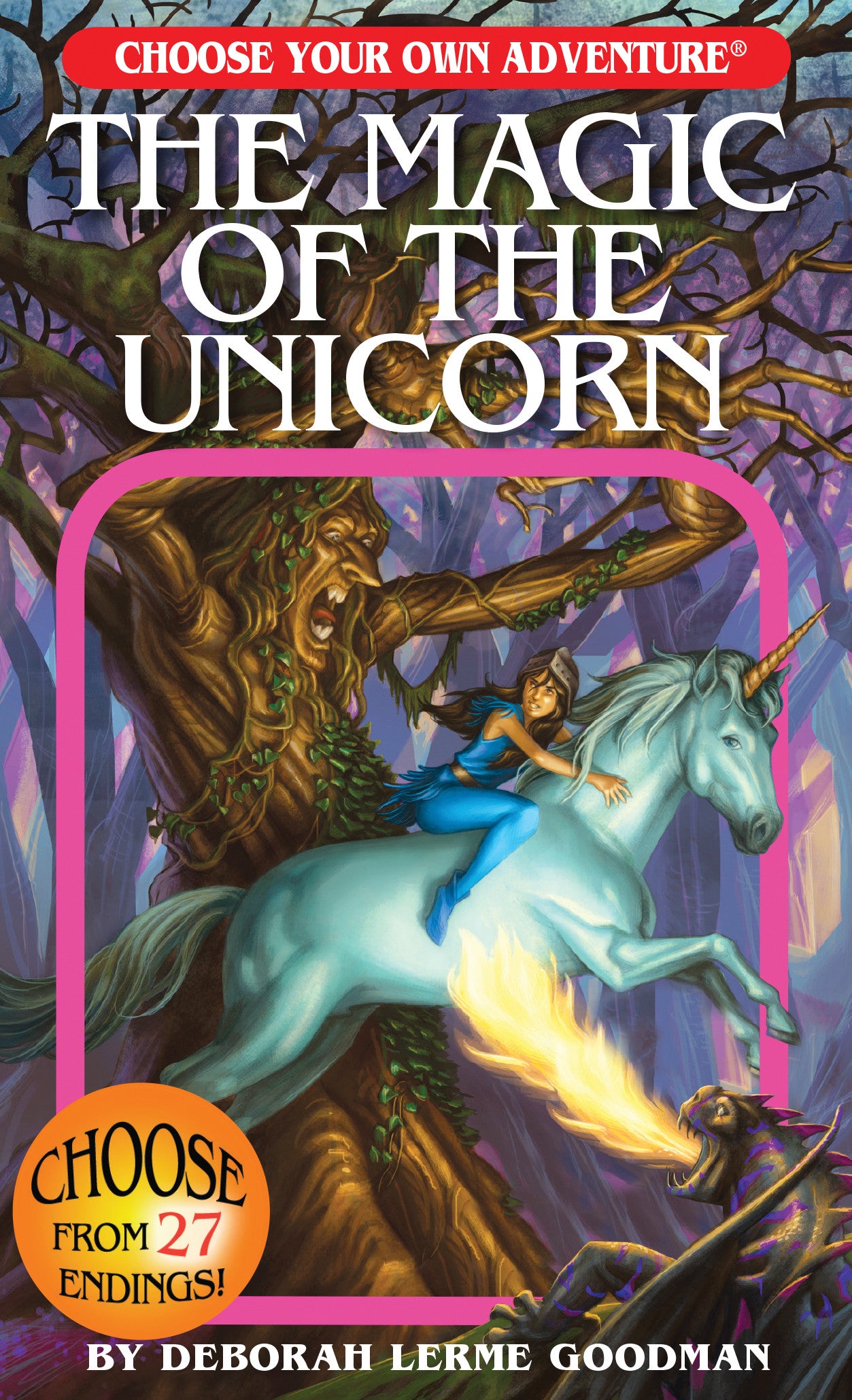
Thoughts about The Magic of the Unicorn

Read the previous piece in the series here.


 don't think it even approaches being a secret that I am a nerd, and a big one. I don't think its anything resembling a secret, either, that I (quietly?) encourage my daughter, seven years old as I write this, to follow along in my nerdiness. She's picked up a fair bit of it in musical taste so far, which pleases me, and there are glimmers of it in such things as a recent question she asked me: "Daddy, what's a gelatinous cube?" I am pleased to report that she appreciated a quick perusal of an older-edition Monster Manual for an answer, and it looks to be time to encourage her towards roleplaying games.

https://cdn.shopify.com/s/files/1/0079/6942/products/Unicorn_cover_RGB.jpg?v=1568797821
The cover, of course.
Image taken from the book's webpage,
used for commentary.
With that thought in mind, I looked at other bookshelves in my home than those where my RPG materials rest, seeing if I couldn't find something that might serve as a solid introduction to the genre for her but that would be accessible to her; she reads, and at or above grade level, and I'm proud of her for it, but there's a lot of RPG material that's dry and difficult slogging, especially for a seven-year-old. Fortunately, because I am a nerd and am married to a nerd, and both of us remember such things fondly from our own earlier years, we have a number of Choose Your Own Adventure books on hand--and Deborah Lerme Goodman's The Magic of the Unicorn (Chooseco, 2017; ISBN 978-1-937133-25-2) was the one that came off of the shelf for me.

Like all examples of the genre, The Magic of the Unicorn rewards re-readings and consideration of choices to be made; there are multiple endings to be found, and not all of them are particularly pleasant, although no few of them are. And while the specific text may be a bit ambitious for my daughter at this point--she's in first grade now, and the book checks out at a fifth-grade reading level--the ability to make choices and have them matter is something that my little girl appreciates. Too, she likes unicorns and dragons and the like that appear in the text, even though she doesn't always like every ending she runs into as we read it together.

The more pertinent stuff for this webspace, though, is how the text presents the medieval. It certainly presents itself as presenting it; ad copy on the book's webpage offers the following description:

Only a unicorn's horn can purify the water in your medieval village, so you set off to find one. Can you solve the town riddle and find the sorceress? Does a unicorn reside in the forest? A fire-breathing dragon, angry warlock, and powerful wood-witch all stand in your path.
So, that is there. The first sentence of the book complicates the matter, however; reading "The summer of 1507 is exceptionally dry throughout Flanders" (1), the statement regarding setting puts the events of the book into the ambiguous, liminal period that could be considered either medieval or early modern, depending on definitions of the terms (as noted here). While it does get the bit about the drought right, the ambiguous placement in time sits...oddly with me as I read it against the description of the book as medieval.

The rest of the text and the paratext work to make the book more medieval, however. Although there is much of the hovels-and-heraldry stereotyping at work, there are a lot of details that ring true. A weaver figures eminently, and weaving was among the major economic drivers of Flanders at the time. Too, monastic figures and churches take up a fair bit of space in the work, reinforcing the association with the medieval (yes, such figures extend well outside the medieval, but the medieval is often presented as typified by the interpenetration of Christian institutions into civil ones), and "typical" feudal structures are very much in place. In all, as might be expected from a children's book (and about which I have opined before), The Magic of the Unicorn works from an idealized, condensed, compressed understanding of the medieval that does well enough--again, unpleasant endings await readers, averting the Disneyfication of the period--and it could do better without losing narrative thrust or confusing younger readers.

That said, there are things the book does well. An early encounter along one narrative line in the text is with "Simon, a traveling peddler [the protagonist has] always liked" (7). The accompanying illustration (6), at least in the edition of the text I have, is of a dark-skinned man in what appear to be good clothes--they compare favorably with even some of the noble figures presented in the book, and better than the clothes worn by the prominent weaver (37)--so the problems of the monochrome Middle Ages and the Manichean allegory are averted (at least in part; tokenism may still be regarded as an issue of concern). Too, while there is much flattening of the medieval in the text, and there are decidedly fantastical elements in it--dragons, griffins, alchemy, and the titular magic and unicorn--the book does not avoid peril, injury, and death--including in what seems very much an oubliette, medievalist if not necessarily medieval; the book's medievalism is not all knights and princesses and pageantry, even as it is not all grim and grime and gory. And in maintaining at least that much nuance, it does decently enough for an elementary school read--although it, like all of us, could do better.

Thursday, April 15, 2021

Sorry, I'm Not There Yet

So.

Skeletor - Evil Laugh GIF - EvilLaugh Laugh Evil GIFs
Such joy at avoiding the comparison...
Image from Tenor.com, used for commentary.


At the moment, I'm not amid any rewatches or rereads (other than the ongoing Hobb one), my daughter's watching YouTube life-hack videos, my wife's largely watching other things and reading for work, and my own media consumption is more or less in that same line. Consequently, I've been casting about for things about which to write. An online friend of mine--goes by Box--suggested that I might try to read Skeletor as an iteration of Æþelræd Unræd, and I looked into that possibility; while it could be argued that He-Man is a strange iteration of tropes regarding Danes, putting Skeletor in even such a position as Ironside's father would be a stretch even I am not willing to try.

Too, as I was doing some idle reading, I came across one of what I have found are many private projects positing what the United States might come to look like after an unspecified event resulted in the loss of modern technologies--a feudal America, as it is described. It piqued my interest initially, as could be expected; it'd certainly be a tale after Tolkien, and it's the kind of thing of which no few RPG settings are made (and, honestly, the concept's one that'd be interesting to play in). But as I reviewed the project and its author, I noted some...problems in it--not the relative age of the source, no, because I can work with things done in good faith that have simply been superseded by new information, but in some of the associations and assertions. I'm not linking it here for those reasons.

Honestly, there are enough problems with the medieval, broadly conceived, being deployed by hate groups to bolster execrable ideologies--and it is clear that there are more such groups doing more foul work that should be tolerated. How wrong such things are is amply and abundantly attested by far more intelligent and capable scholars than I--Mary Rambaran-Olm, Dorothy Kim, Adam Miyashiro, Jonathan Hsy, and others--whose work is well worth reading and investigating. I do what I can to address well-meaning errors in my groups; people make honest mistakes, working from information that has been superseded or that they accepted in good faith from people who did not act in the same. And, here, at least, I continue to call for the repudiation of hateful, wrong-headed ideologies that try to prop up systems of oppression and unwarranted violence; I may not be able to raise my hand against the evils of the world, but I can, at least, join others in raising my voice against them.

Thursday, April 1, 2021

The Dragon Prince Rewatch 3.9, "The Final Battle"

Read the previous entry here.
Will there be another entry in this series?

It's no joke; the rewatch has caught up with the series at last.

3.9, "The Final Battle"

Written by Aaron Ehasz and Justin Richmond
Directed by Villads Spangsberg

Synopsis

Maybe they'll work better as tattoos...
Image taken from the episode, used for commentary.

Callum marks himself with the characters for the spell Ibis uses to give himself wings, preparing to attempt the magic in advance of the coming battle. The attempt fails, and Rayla offers some gentle mockery before the two consider their situation and likely deaths. Soren interrupts to summon them to council, apologizing for his prior misdeeds towards Callum.

Viren's army passes the petrified remains of Avizandum, and Viren praises Claudia for her loyalty and her prowess. Aaravos offers to teach Viren how to drain Zym's power and enhance himself.

The council in the Stormspire progresses, with plan of battle laid out. Zym sorrows amid it, however, and Bait attempts to comfort him. Rayla offers to guard the two and is hailed as the last Dragonguard.

Not a face to see in a back alley...
Image taken from the episode, used for commentary.
Viren's army advances, approaching the Stormspire and its arrayed defenders in power and terror. The empowered Kasif rages forward without orders, followed swiftly by the rest of the army, and battle is joined. The use of magic by Claudia and Viren is a factor that further unbalances an already asymmetrical conflict; the arrival of a flight of dragons seems to even out matters initially, but the seeming soon reveals itself as such, as the dragons' fire strengthens the invading army.

Was this the plan all along?
Image taken from the episode, used for commentary.
Battle continues, with the dragons coming under restraining fire. Several are brought down.

Within the Stormspire, Rayla accompanies Zym as the titular dragon prince calls upon his mother at last. Despite his clear entreaty, she does not respond, but continues to slumber deeply.

The invading army breaks through the first defensive line. Callum deploys his own magic to interdict the advance, meeting only limited success. He is saved by the arrival of other human forces, led Aanya of Duren; the onslaught helps to balance the conflict, and the newly reinforced defenders make progress against their attackers, finding victory on the field. Ezran calls for tending to the enemy wounded amid freeing the restrained dragons, though there is some resistance to the idea. Viren's absence is noted and the search for him begins.

Pursuing Claudia, Ezran encounters Viren; Soren defends Ezran, confirming that he has turned against his father utterly. It is also revealed that the Viren present is not the real one; the actual Viren is elsewhere, pursuing Zym, whom Rayla and Bait defend in vain. Zym flees but is taken at the pinnacle of the Stormspire despite the attempt to fly away, and Viren begins to drain power from him through Aaravos's ritual. Rayla again attempts to interdict Viren, pitching them both from the pinnacle. Callum leaps to her salvation, finally enacting the spell Ibis used, and saving her; they affirm their love.

A promise of more to come.
Image taken from the episode, used for commentary.
After, the victorious forces confer, with amity among them in the offering as Ezran is recognized again as king. Zym's mother awakens, and the gathered forces present themselves to her as one. And Viren awakens, Claudia having restored his body and life at great cost to herself; Aaravos, however, is absent from him, having metamorphosed into a form that foretells something else...

Discussion

From the episode, in comparison to the films,
used for commentary...
It is clear that the battle scenes borrow from Jackson's Middle-earth films and their depictions of such battles as at Gorgoroth, of the Five Armies, at Helm's Deep, and at the Pelennor. That is not to be wondered at, given the outsize influence of the movies and their antecedent texts on popular culture, generally, and on the presumed secondary audience of the series--the parents of the children who would watch it, including me--more specifically. Such evocation does not make the episode particularly authentically medieval, but it does make it medievalist in the way Sturtevant describes as supplanting or replacing the medieval in common conception. That there are problems of coding in the episode--note the association of animalistic rage with dark-skinned characters on both sides of the conflict--is perhaps one with that, as might be inferred from applying Niels Werber across the similarity between works and looking at the long and amply attested association of medievalist work and racist impetus. Even without overtly racist intent, after all, a thing can reinforce racism, and appropriation by execrable ideologues happens, as is all too abundantly clear.

At a minimum, it is a fraught issue. But I think more than the minimum much of the time.

It should be noted that, while it is clear from the episode there is more story to tell, and press releases have noted that more of the series is to come, there is not more of it as of this writing. If and when more emerges--because renewals, even when announced, are not guaranteed--I will resume the re/watch; until then, though, I will turn to other projects after a bit of a break. I'll have new material on 15 April 2021; I hope you'll return to read it!

Thursday, March 25, 2021

The Dragon Prince Rewatch 3.8, "Dragonguard"

Read the previous entry here.
Read the next entry here.

In the penultimate episode of the season, forces array against each other in advance of the clash to come.

3.8, "Dragonguard"

Written by Devon Giehl and Iain Hendry
Directed by Villads Spangsberg

Synopsis

Impressive. Most impressive.
Image taken from the episode, used for commentary.

At the towering Stormspire, Azymondias, Ezran, Rayla, Callum, and Bait learn more about the current situation of the Queen of Dragons from the mage, Ibis. She lives, but she is weak and withdrawn within herself, in something like a coma or deep meditation. Zym hesitates to approach her, and the rest proceed, leaving Bait with the young dragon. The immense form of the Queen of Dragons awes them, and Ezran attempts to reach her within herself--to no avail.

Rayla flees, and Callum pursues her, asking after her thoughts; she relates the unease at being where her parents fled and failed. He offers such comfort as he can.

No William Tell Overture here...
Image taken from the episode, used for commentary.
A weary Soren rides across Xadia, reaching the Stormspire and beginning to ascend its many steps. He only gets so far up the slope before beginning to fatigue and suffer from the altitude, and he is confronted by the dragon he had attacked before. Ezran greets him, however, and secures his safe passage to Callum, who works the requisite magic to permit him to breathe at height. Soren is questioned regarding his purpose, and he reports the advance of Viren's multinational army and its magical enhancement.

Birds of a feather...
Image taken from the episode, used for commentary.
After, Callum consults Ibis, who purposes to scout. There is some awkwardness in their interaction; Callum betrays unfamiliarity and asks questions he acknowledges may be rude. Ibis indulges his questions and demonstrates a powerful spell. Callum marvels and asks to be taught. Ibis demurs, and Callum demonstrates that he is capable of magic; Ibis suggests that he flee with Zym instead of facing the perils to come.

Callum reports the conversation to Rayla, who balks at the implication that she should flee as her parents did--though she sends Zym, Ezran, Callum, and Soren on. She asks Callum to remember her as she makes to redeem her family's failure, and he rails against her acceptance of her parents' fate; it is not a happy parting, but, in its wake, Callum realizes there is something to be done, recalling a working Lujanne had done. He follows up on the idea, repeating the working to reveal what had happened when Viren had ransacked the lair of the King and Queen of Dragons. Rayla's parents had not fled, but had been defeated defending their charge from Viren; when Callum reports his findings to her, with all their horror, she realizes her path is her own to follow, and she determines to keep her fate with theirs.

Howdy, boys!
Image taken from the episode, used for commentary.
That night, the group takes council regarding what to do. Soren reports the depths of his father's depravity and the extent of the threat he poses--and the peril of his seeming virtue in persuading others to follow what they have reason to believe is a righteous cause. Rayla is convinced of Soren's view, and they purpose to fight where they are. Ibis reports the proximity of Viren's army--and the unexpected arrival of Amaya, borne by Janai. The remaining forces of Lux Aurea are arrayed to defend the Stormspire. Preparations for a coming siege begin--on both sides.

Discussion

As the season--and what has been released of the series as of this writing--is drawing towards a close in the present episode, there is little enough of new medievalism to trace. Tropes already in place continue, as does recourse to Tolkien for medieval ideas; there is something of the Battle of Five Armies in the setup the present episode offers.

A few small notes present themselves, however. Soren's comment about not climbing the mountain in armor is one; it evokes conceptions of medieval armor as cumbersome, defying common-sense ideas that fighting equipment needs to allow movement for fighting. Admittedly, the additional weight would be a problem for any heavy activity, however articulated and distributed the weight might be, but earlier instances in the series of Soren undertaking heavy activity in armor do not show the change. Rather, they reflect things others have reported (here, for example), namely that it is remarkably easy to move in medieval armor--the more so for someone long trained to it, as Soren would evidently be. So there is that.

Another is that the series seems to have finally come down against the kind of Crusader mentality on display among the human armies. It might be wondered whether the assertion--which puts the putative crusaders clearly in the wrong--is a comment on real-life parallels, particularly the ongoing appropriation by white supremacist groups of medieval imagery and (outdated) medievalist understandings to support their execrable ideology. But surely no children's program would engage in such persuasion...